
Carlos Santana on Why Feeling Matters More Than Perfection
Hello Friends,
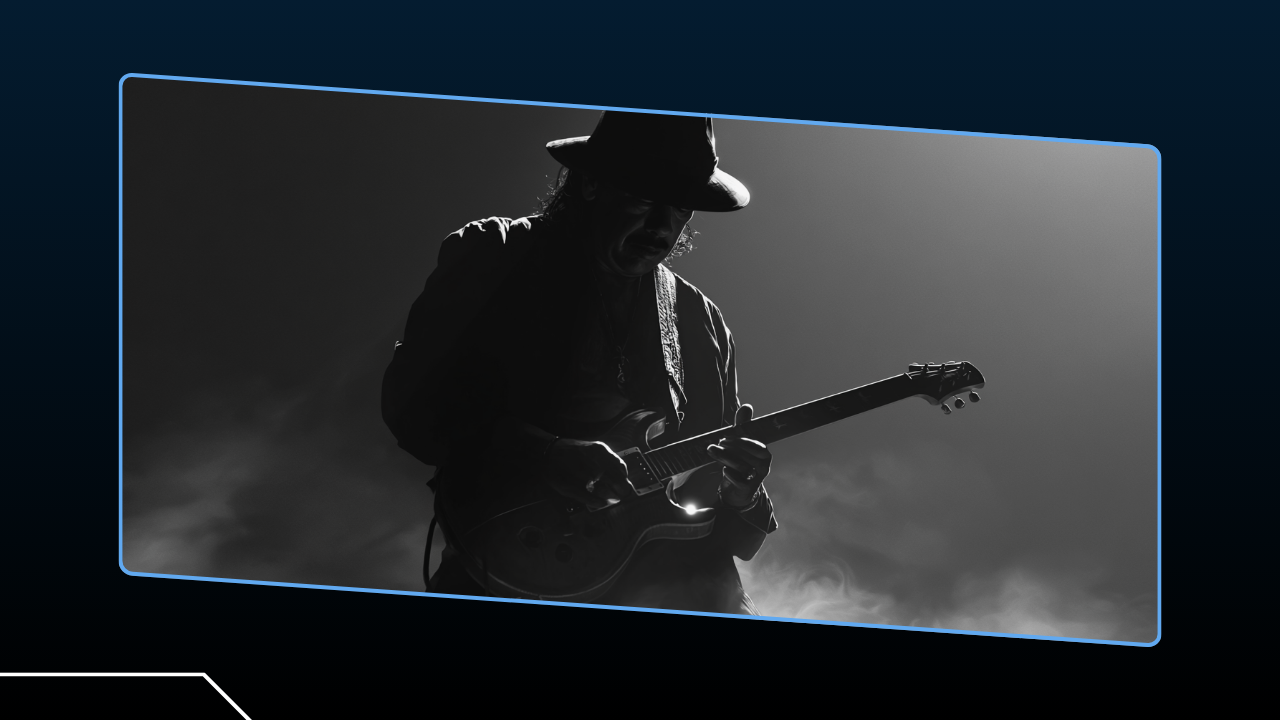
Carlos Santana once gave a piece of advice that feels more relevant now than ever:
“If you don’t give yourself chills, no one else is going to get them either.”
It sounds simple, but there’s a lot buried inside that statement, especially in an era where so much music is judged by algorithms, short attention spans, and technical perfection.
What Santana was really talking about wasn’t skill level. It was emotional transmission.
The idea that music only truly connects when the artist themselves feels something real while creating it.
Technical Perfection Doesn’t Guarantee Connection
One of the strange things about modern music production is that it’s easier than ever to make something sound professionally polished.
Vocals can be perfectly tuned. Drums can be perfectly quantized. Mixes can be surgically clean. Entire productions can be assembled with incredible precision inside a laptop.
And yet, a lot of technically flawless music still feels emotionally flat.
That’s the disconnect Santana was pointing toward.
Listeners rarely connect to music because it’s mathematically correct. They connect because something inside the performance feels human, urgent, imperfect, vulnerable, or emotionally charged.
Sometimes the moments people remember most aren’t even technically “perfect” moments.
They’re the notes that strain slightly. The vocal cracks. The timing imperfections. The tension behind a phrase that feels emotionally believable.
Those details communicate far more than precision alone ever could.
Intensity Matters More Than Volume
Another important thing Santana mentioned was that emotional impact has nothing to do with loudness.
“It’s not volume,” he said. “It’s the intensity of your heart.”
That distinction matters a lot today because modern production often mistakes intensity for excess.
Bigger drums. More layers. Louder masters. Denser arrangements. Constant stimulation.
But emotional intensity usually comes from conviction, not quantity.
A quiet vocal can feel massive if the emotion behind it is undeniable. A sparse arrangement can feel overwhelming if the performance carries enough weight.
A lot of legendary recordings actually leave enormous amounts of space in the production because the emotion itself is doing the heavy lifting.
That restraint is difficult to maintain now because creators are constantly competing for attention. But overproduction often weakens emotional clarity instead of strengthening it.
Audiences Can Usually Tell When Something Is Real
One reason Santana’s quote continues to resonate is because listeners are extremely good at sensing authenticity, even if they can’t always explain why.
People respond differently when an artist genuinely means what they’re playing.
That doesn’t necessarily require autobiographical lyrics or dramatic performances either. Instrumental music can communicate the same thing. Film scores can communicate it. Sound design can communicate it.
The common factor is emotional intention.
When artists are disconnected from what they’re making, audiences often feel that distance immediately. The music may still sound impressive, but it becomes harder for people to emotionally attach themselves to it.
That’s part of why certain older recordings still feel timeless despite technical limitations. The emotional energy survives the imperfections.
In some cases, the imperfections actually reinforce the honesty of the performance.
Why This Advice Still Matters
Santana’s quote also pushes against a mindset that quietly affects a lot of artists now: creating primarily for reaction instead of connection.
Metrics, trends, engagement, playlists, virality, audience retention.
Those things obviously matter professionally, but they can also pull artists away from the original emotional reason they started making music in the first place.
“If you don’t give yourself chills” is really a reminder that music has to affect the creator first before it can affect anyone else meaningfully.
Not every song needs to be deeply emotional or serious, obviously. But the audience usually feels when an artist is fully present inside the work versus when they’re simply assembling content efficiently.
That difference still matters.
Probably more now than ever.
-Nathan
Share this article
Let’s Create Together
Are you a visual storyteller in media? My team and I are excited to explore how we can bring your stories to life with distinctive soundscapes. Get in touch and let’s discuss how music and sound design can transform your project.
++

++
Nathan's Picks


++

Get your music movie-ready with cinematic sounds built for today's film, trailer, and sync landscape.