
Metadata: The Key to Royalties, Discovery, and Credibility in Music

Hello Friends,
Every song has a story, and not just the one you hear through the speakers. Behind the sound is another layer most listeners never think about: metadata. It’s not glamorous, but it’s what keeps the music world connected. Metadata makes songs discoverable, ensures royalties are paid, and gives credit where credit is due. Without it, music gets lost, and the people who created it often don’t get what they deserve.
What Metadata Really Does
When you upload a track, metadata is the information that goes with it. It can be as basic as the song title and artist name or as detailed as the list of writers, producers, session musicians, and publishers. It also includes things like the release date, track length, and genre.
Then there are the tags that describe how a song feels, its mood, tempo, or instrumentation. These are what help a supervisor find the right track for a film scene or a playlist curator add it to a specific vibe. Without these details, your song becomes harder to locate and harder to place.
Metadata may seem like a background detail, but in reality, it’s the backbone that holds the digital music ecosystem together.
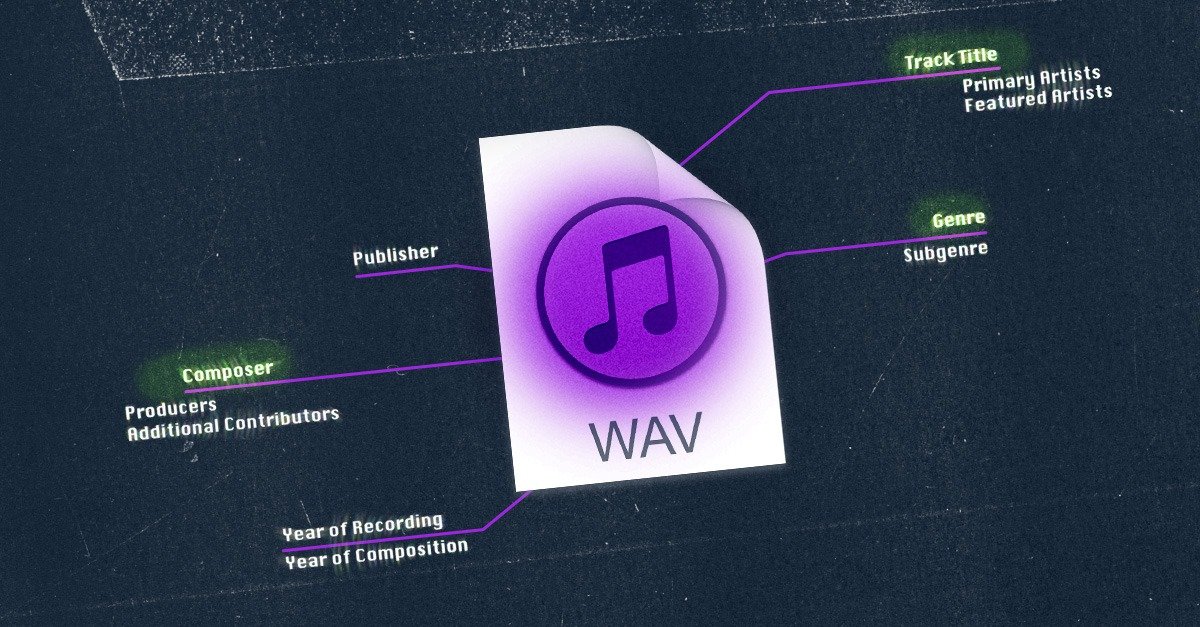
Photo Credit: LANDR
Royalties and Recognition
Royalties are one of the most obvious reasons metadata matters. If the information tied to a track isn’t accurate, the money often doesn’t make it to the right people. Something as simple as a misspelled name or a missing International Sound Recording Code can create a dead end.
Industry reports estimate that billions of dollars in royalties have gone unclaimed over the past decade because of errors like these. For independent artists and songwriters, that’s not just frustrating, it’s a serious financial loss. Metadata is the bridge between the work you put into your music and the payment you should receive for it.
Standing Out in a Sea of New Music
The amount of new music uploaded to streaming platforms is staggering. Roughly 60,000 songs are added every single day. With that much content flooding in, metadata becomes a lifeline for discoverability.
Streaming platforms use metadata to feed their recommendation engines, which connect listeners to new songs and artists. Supervisors searching for a track that fits a scene rely on metadata to sort through vast catalogs quickly. Even playlist placement often depends on how well a song has been tagged.
If your track doesn’t have complete or accurate metadata, it risks slipping through the cracks. On the other hand, a well-documented track has a much better chance of being surfaced in recommendations, placed in a playlist, or selected for sync.
The Challenge of No Standard
For all the importance of metadata, the industry still hasn’t settled on a universal standard. Different companies have their own systems, and the information doesn’t always transfer cleanly when music moves between distributors, publishers, and platforms.
To make things even trickier, some file formats, like WAV, don’t carry embedded metadata at all. That means when files are shared, the information can get lost along the way. Add in the rush that often surrounds music releases, and mistakes become almost inevitable.
Attempts have been made to establish a global standard, but none have stuck. And as more and more songs enter the system every day, creating one only gets harder. Until then, the responsibility falls largely on artists, labels, and distributors to double-check their data.
Why Artists Should Care
It’s easy for artists to overlook metadata because it doesn’t feel as creative as writing or producing a song. But ignoring it can hold a career back. Accurate metadata protects royalties, makes songs easier to find, and presents you as a professional to the people you want to work with.
Supervisors, labels, and playlist curators notice when music comes in with complete, clean information. It saves them time and signals that you’ve taken care of the details. On the flip side, missing or messy metadata can slow everything down and sometimes stop opportunities in their tracks.
At Rareform Audio, I’ve seen just how much of a difference good metadata can make. That’s why us and our partner, Black Sheep Music, put together a new searchable catalog built with discovery in mind. The idea is simple: make it easier for supervisors, editors, and producers to find the right track without digging through endless files. It’s a good reminder that when the details are handled right, the music has a much better shot at landing where it should.
Catch you in the next one,
-Nathan
Share this article
Let’s Create Together
Are you a visual storyteller in media? My team and I are excited to explore how we can bring your stories to life with distinctive soundscapes. Get in touch and let’s discuss how music and sound design can transform your project.
++

++
Nathan's Picks


++

Get your music movie-ready with cinematic sounds built for today's film, trailer, and sync landscape.